
Dental IT Support Services That Keep Clinics Running
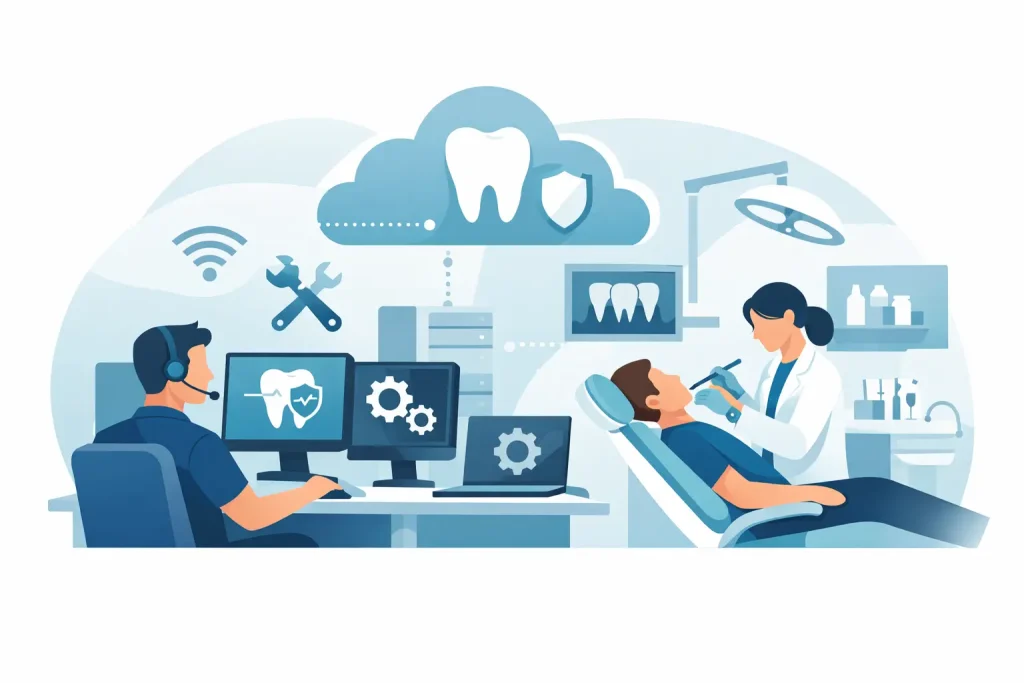
A slow practice management system at 8:45 on a Monday morning is not a minor IT issue. It means reception queues, delayed appointments, stressed staff and a poor start for patients. That is why dental IT support services matter so much. In a dental setting, technology is tied directly to patient flow, clinical records, imaging, communication and day-to-day revenue.
General business IT support can help with passwords, printers and laptops. A dental practice usually needs more than that. It needs support that understands how surgeries operate, how front-of-house teams work, and how systems connect across reception, treatment rooms and back-office functions. When that knowledge is missing, small technical faults quickly become operational problems.
What makes dental IT support services different?
A dental clinic depends on a tighter mix of systems than many other small businesses. There is usually a practice management platform, digital imaging, email, telephony, internet connectivity, workstations at reception, PCs in surgeries, backups, cyber security tools and often cloud services layered over the top. If one part fails, the impact spreads fast.
Dental IT support services are different because they have to work around live clinical activity. Support cannot be built only around office hours or generic ticket handling. It needs to be responsive, practical and aware of what can and cannot wait. A scanner issue before a patient consultation is not the same as a spreadsheet problem in a standard office.
There is also a compliance angle. Dental practices handle sensitive patient data and rely on secure access to records. That means cyber security, user permissions, backups and recovery plans need proper attention. The right support partner helps reduce risk without making systems difficult for staff to use.
The systems a dental practice relies on every day
Most practice managers are not looking for a lesson in infrastructure. They want confidence that the essentials will work. That usually starts with the core devices and network. Reception PCs, surgery workstations, Wi-Fi, internet lines, printers and phones all need to be stable because they affect both patient communication and staff efficiency.
Then there are the specialist systems. Dental imaging, patient records, charting software and appointment management tools all need to work consistently and often need to communicate with each other. Updates must be handled carefully. If a software patch fixes one issue but disrupts another application, the cost is measured in disruption, not just inconvenience.
Cloud platforms also play a growing role. Some practices want more flexibility for multi-site access, easier file sharing or better continuity if the physical site has a problem. Others prefer a more local setup for specific systems. There is no single answer here. Good support means recommending what fits the practice, not forcing a one-size-fits-all model.
Why downtime costs more in dentistry
In many businesses, downtime causes frustration. In a dental practice, it can stop the day altogether. If the clinical team cannot access records, confirm medical histories or review imaging, appointments slow down or need to be rearranged. That creates pressure on staff and undermines patient confidence.
There is also the hidden cost of repeated minor faults. A printer that drops off the network twice a week, a slow login process at the front desk or unreliable remote access for managers might seem manageable in isolation. Over time, those issues eat into productivity and create workarounds that are both inefficient and risky.
This is why reactive support alone is rarely enough. Waiting for something to break and then fixing it can work in low-pressure environments. In dentistry, a more proactive approach usually delivers better value. Monitoring systems, replacing ageing hardware before it fails, managing updates properly and reviewing security settings all help prevent avoidable disruption.
What to expect from a good support provider
The best support providers do not just answer tickets. They take ownership. For a dental practice, that means understanding which systems are business-critical, responding with urgency when core services fail and keeping communication clear for non-technical staff.
Fast response matters, but so does context. If your provider understands the layout of a practice, the role of each device and the software your team uses every day, issues are resolved faster and with less back and forth. Staff do not want to explain the same setup from scratch every time they call for help.
A strong provider should also help with planning, not only fault fixing. That could include reviewing old hardware, advising on Microsoft 365, strengthening cyber security, managing backups, supporting a practice move or helping with a second site. It is easier to make sound decisions when one partner can see the full picture.
Dental IT support services and cyber security
Cyber security is often treated as a separate project until something goes wrong. In reality, it should be part of everyday IT support. Dental practices are not too small to be targeted. In many cases, smaller organisations are more exposed because they have limited in-house expertise and older systems.
The basics still matter most. Strong password policies, multi-factor authentication, managed antivirus, patching, secure backups and controlled user access reduce a large share of common risks. Staff awareness also matters because phishing emails and social engineering remain a practical threat.
That said, security has to be balanced with usability. If processes are too awkward, people look for shortcuts. A support provider with healthcare or dental experience is more likely to put sensible controls in place that protect the practice without slowing everyone down.
Remote support, on-site support and when you need both
Most day-to-day issues can be handled remotely, which is often the quickest option. If a user account needs resetting, email stops syncing or a software setting needs adjusting, remote access can solve the problem without delay. That saves time and gets staff moving again.
But not everything should be remote. Network faults, hardware failures, cabling issues, surgery PC problems or a site-wide outage may need an engineer on-site. A provider that offers both gives you more flexibility and a clearer route to resolution when the issue is physical rather than software-based.
For practices in Manchester, the North West and further afield, this mixed model can work well. Remote support handles the routine efficiently, while on-site help is there when the situation calls for hands-on work. The key is knowing the difference and acting quickly.
Choosing the right fit for your practice
Not every practice needs the same level of support. A single-site clinic with a simple setup may need reliable day-to-day cover, cybersecurity basics and someone to handle upgrades sensibly. A larger practice or multi-site group may need broader strategic support, network planning, telephony integration and tighter standardisation across locations.
It is worth asking how the provider deals with urgency, what experience they have in dental environments and whether they can support the wider technology picture. If one company can handle support, procurement, cyber security, cloud services and communications, life is usually simpler. You avoid the blame game between suppliers and get one accountable partner.
This is where a specialist provider such as Terahost can make a real difference. The value is not just technical knowledge. It is the ability to solve issues quickly, support the full environment and understand why continuity matters so much in a live dental setting.
The long-term value of getting it right
Reliable IT support is easy to overlook when everything is working. The real value shows up in quieter ways – fewer interruptions, less stress for staff, better protection for patient data and more confidence when the practice grows or changes.
It also gives managers space to focus on running the clinic instead of chasing suppliers, restarting devices or worrying about backups. That shift matters. Technology should support the practice, not become another operational burden.
The right dental IT support services do not just fix faults. They help create a more stable, secure and resilient practice. And when your systems are built around the way your team actually works, patients feel the difference too.
If your current setup only gets attention when something breaks, that is usually the first sign it is time for a better plan. Good support is not about adding complexity. It is about making the working day more predictable, so your team can focus on patient care and your practice can keep moving without unnecessary disruption.
Need Specialist Dental IT Support?
Terahost supports dental practices across Manchester, Stockport and the North West, including SOE Exact, Dentally, iSmile, Carestream and Microsoft 365 environments.