
IT Support for Dental Practices That Works
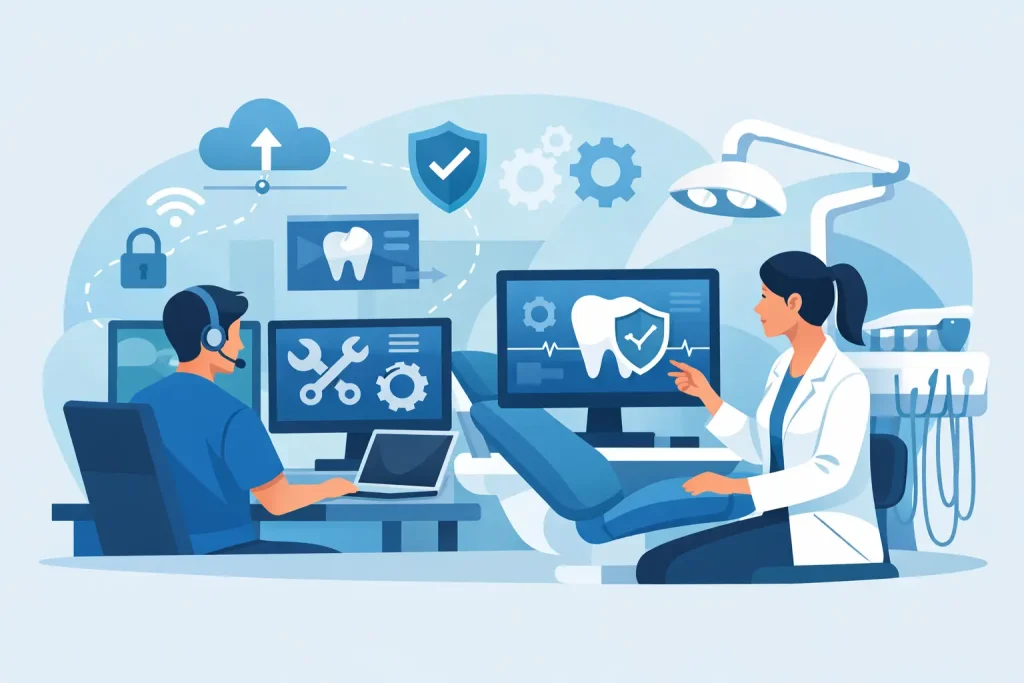
A slow practice management system at 8:45am can throw off an entire day. Appointments back up, staff lose time, patients get frustrated, and what should have been routine becomes stressful very quickly. That is why reliable IT support for dental practices is not just a technical service. It is part of keeping the practice running safely, efficiently, and without avoidable disruption.
Dental clinics depend on technology in a way many other small businesses do not. Reception, surgery rooms, imaging systems, patient records, email, telephony, internet connectivity and cyber security all need to work together. When one part fails, the impact is immediate. Good support is about more than fixing faults. It is about understanding how the practice works, where the risks sit, and how to keep everyone productive.
Why dental practices need specialist IT support
A dental practice has very different demands from a standard office. Clinical software, digital x-rays, patient communication systems and connected devices all have their own requirements. Add data protection responsibilities and the need to maintain patient confidence, and the margin for error becomes small.
General business IT support can help with common issues, but it may not always be enough. Dental environments need engineers who understand the pace of a clinic, the software involved and the fact that downtime affects patient care as well as revenue. A printer problem in a normal office is an inconvenience. A software or network issue in a dental practice can delay treatment, disrupt schedules and create unnecessary pressure for the team.
That is why sector knowledge matters. Support should fit the way the practice actually operates, not force the practice to adapt around the IT provider.
What good IT support for dental practices should cover
The basics still matter. Devices need to be set up properly, users need quick help when something goes wrong, and systems need regular maintenance. But for dental practices, support usually needs to go further than that.
Practice management software is central to day-to-day operations, so it needs to be stable, updated and properly supported. Workstations at reception and in treatment rooms must be reliable and consistent. Internet and Wi-Fi coverage need to be strong across the building, including areas where old layouts or thick walls can cause weak spots. Voice systems also matter more than some practices realise, because missed calls often mean missed bookings.
Cyber security is another major area. Dental practices hold sensitive patient information, financial data and internal records. That makes them a target for phishing, ransomware and account compromise. Protection needs to include secure access, antivirus, patching, backups, staff awareness and a clear response plan if something goes wrong.
There is also the question of long-term planning. Many practices grow in stages. A second surgery room gets added, a new scanner is introduced, more team members join, or remote access becomes necessary for admin work. IT support should not only respond to faults. It should help the practice plan ahead so technology keeps pace with growth.
The real cost of downtime in a dental clinic
Some practices only review support after a serious issue. By then, the cost has already been felt.
Downtime in a dental setting is rarely limited to one machine. If the server fails, the broadband drops, or a key system becomes unavailable, the knock-on effect can spread across the whole practice. Clinicians may not be able to view records. Reception may struggle to confirm appointments. Digital imaging may be interrupted. The team ends up switching to workarounds that are slower and more stressful.
There is a financial cost, of course, but there is also a reputational one. Patients notice delays and disorganisation. Staff morale takes a hit when the same problems keep recurring. A support arrangement that seems cheaper on paper can become expensive if response times are poor or recurring issues never get properly resolved.
This is where proactive support makes a difference. Monitoring, maintenance, patch management and regular reviews can catch many issues before they become major disruptions. Not every problem can be prevented, but many can be reduced in frequency and impact.
Cyber security and compliance are part of patient care
In dental practices, security is not a separate IT issue sitting in the background. It is tied directly to trust.
Patients expect their information to be handled properly. Practice owners and managers also have clear responsibilities when it comes to protecting systems and data. That means relying on old hardware, weak passwords or ad hoc backups is a risk few clinics can afford.
A sensible approach starts with the fundamentals. Devices should be patched, supported and protected. Access should be controlled so staff only reach what they need. Emails should be filtered and monitored because phishing remains one of the most common routes into a business. Backups should be tested, not simply assumed to be working.
There is a balance to strike here. Security measures need to be strong, but they also need to fit the reality of a busy clinic. If controls are too awkward, staff will find workarounds. The right support partner helps set up protection that is practical as well as effective.
Choosing between reactive and managed support
Not every practice needs the same model of support. A small clinic with a simple setup may begin with ad hoc help when issues arise. A larger or busier practice may need a fully managed service with monitoring, maintenance, cyber security and strategic guidance included.
Reactive support can work if systems are modern, risks are low and internal staff can handle some basics. The trade-off is that problems tend to be discovered after they have already started causing disruption. Managed support is generally better suited to practices that want predictability, faster response and fewer surprises.
For most dental practices, the better question is not whether support is needed, but how much responsibility they want to hand over. If the goal is to focus on patients, front-of-house service and growth rather than chasing suppliers and troubleshooting devices, a managed approach often makes more sense.
What to look for in a dental IT support provider
Technical capability matters, but so does attitude. A good provider should respond quickly, explain things clearly and take ownership when problems arise. In a dental setting, that calm, practical approach is especially important because staff do not have time for drawn-out diagnostics or vague updates.
Experience in dental environments is a strong advantage. It means the provider is more likely to understand common software setups, workflow pressure points and the consequences of downtime during clinic hours. It also helps if they can support the wider technology picture, from hardware procurement and networking to cyber security, cloud services and telephony. One accountable partner is often easier to manage than several separate suppliers.
Location can matter too, depending on the practice. Remote support solves many issues quickly, but there are times when an on-site visit is the fastest route back to normal. For practices across Manchester, the North West and wider UK operations, that combination of remote and hands-on support can be particularly useful.
Terahost works with businesses that need exactly that kind of dependable, practical support, including dental practices that cannot afford long interruptions or generic advice.
Building IT around the practice, not the other way round
The best IT support for dental practices is not about adding complexity. It is about removing friction. Systems should help the team move through the day with confidence, whether they are booking appointments, taking payments, accessing records or carrying out treatment.
That usually starts with a proper review of what is already in place. Some practices need an infrastructure refresh because old hardware is causing recurring faults. Others need stronger backup and recovery planning. Some simply need a support provider that answers quickly and resolves issues without passing responsibility around.
There is no single setup that fits every clinic. A mixed NHS and private practice may have different priorities from a specialist cosmetic clinic or a multi-site group. The right support model depends on the size of the team, the systems in use, future growth plans and the level of internal resource available. What matters is that the technology supports the way the practice wants to work.
When IT is handled properly, it fades into the background. The phones ring, the systems load, records are available, and the team can get on with the job. That is the standard dental practices should expect, not a bonus when things happen to go well.
If your current setup feels unpredictable, slow to recover or too reliant on hope, that is usually a sign the practice needs more than break-fix help. The right support gives you fewer interruptions, clearer accountability and more time to focus on patients instead of problems.
Need Specialist Dental IT Support?
Terahost supports dental practices across Manchester, Stockport and the North West, including SOE Exact, Dentally, iSmile, Carestream and Microsoft 365 environments.