
Managed Firewall for Small Business Explained
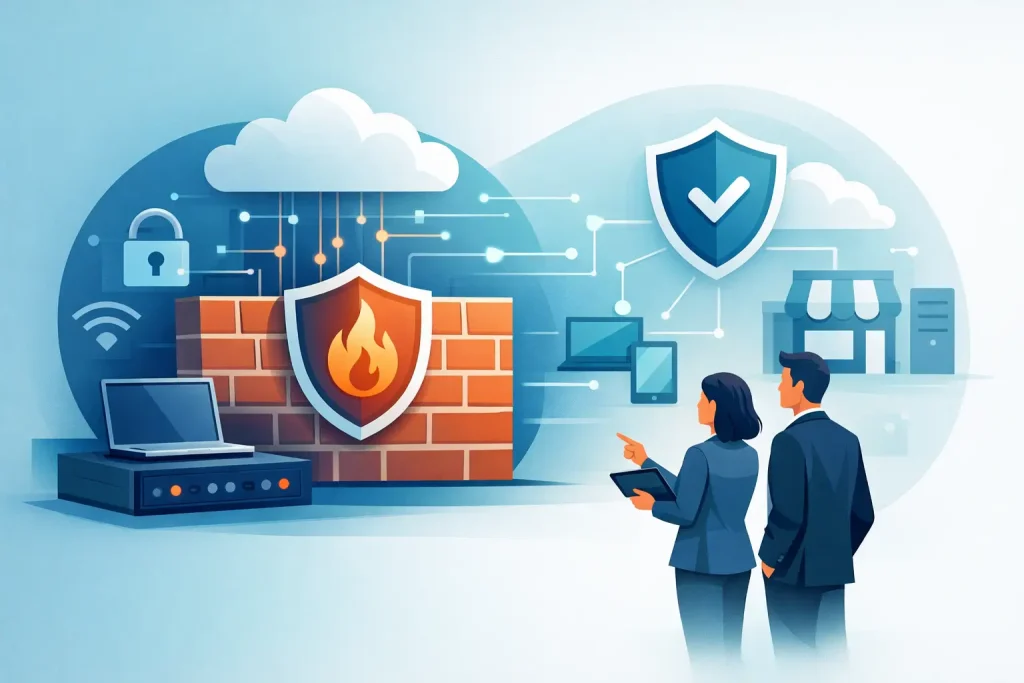
When a member of staff clicks a convincing fake invoice at 4.45pm on a Friday, your firewall is not just another bit of IT kit. It is one of the main things standing between a minor incident and a very expensive Monday. That is why a managed firewall for small business is not simply about buying a box and plugging it in. It is about having the right protection, configured properly, monitored consistently and updated before problems start.
For many smaller businesses, that gap between owning a firewall and actually being protected is where risk creeps in. A lot of firms have some level of security in place, but it may have been installed years ago, set up with default rules, or left untouched as the business changed. New staff join, remote working expands, cloud applications multiply, and suddenly the original setup no longer matches how the company operates.
What a managed firewall for small business actually does
At a basic level, a firewall controls what traffic is allowed in and out of your network. It helps block malicious access, limits suspicious behaviour and creates a barrier between your business systems and the wider internet. That much is well understood.
The managed part is where the real value sits. A managed firewall service usually includes setup, rule configuration, firmware updates, threat monitoring, policy changes, reporting and support when something needs attention. Instead of relying on someone in the office to log in occasionally and hope for the best, you have specialists keeping the service aligned with your business and your risk profile.
That matters because firewalls are not set-and-forget tools. They need ongoing care. Threats change, software changes and your own business needs change. If your team adds a new cloud phone system, opens a second site or gives more people remote access, your firewall policies may need adjusting. If that does not happen, you can end up with security gaps or unnecessary restrictions that frustrate staff and slow work down.
Why small businesses are often the most exposed
Larger organisations usually have internal security teams, formal change control and dedicated monitoring. Smaller businesses rarely do. In most cases, cyber security is one of several responsibilities sitting with an office manager, operations lead or an external IT partner.
That does not mean small businesses are less likely to be targeted. In many cases, the opposite is true. Attackers know smaller firms may have weaker controls, fewer internal resources and less time to spot unusual activity. A practice, warehouse, accountancy firm or engineering company may not think of itself as a target, but it still holds valuable data, relies on connected systems and can be disrupted by the same threats affecting bigger organisations.
The cost of downtime can also hit harder. If a small team cannot access shared files, cloud systems or line-of-business software for half a day, productivity drops quickly. If you work in dental or healthcare settings, the pressure is even higher. Appointments, patient records, imaging systems and communications all need to stay available. Security has to protect the environment without getting in the way of the work.
The difference between buying a firewall and having it managed
A business can buy a decent firewall appliance outright, but ownership does not equal oversight. Many devices are capable of far more than they are actually used for. Features such as intrusion prevention, content filtering, VPN access, application control and web filtering may be available but never tuned properly.
A managed service closes that gap. The firewall is configured around your users, devices and systems rather than left on generic settings. Remote workers can be supported securely. Guest Wi-Fi can be separated from the main network. Unnecessary open ports can be removed. Known threats can be blocked more effectively. Logs can be reviewed for warning signs instead of sitting unread.
There is also the question of response. If a firewall flags suspicious activity, who sees it, and what happens next? For a small business without in-house expertise, alerts can be missed or misunderstood. Managed support means someone is responsible for spotting issues early and taking action before they become business disruption.
What to expect from a managed firewall service
A good service should start with understanding the business, not with technical jargon. The right setup depends on how many users you have, whether staff work remotely, what cloud platforms you rely on, whether you have multiple sites and what level of compliance pressure you operate under.
In practical terms, most businesses should expect initial deployment or review of the existing firewall, secure configuration, regular firmware patching, monitored alerts, change management when requirements shift, and clear reporting. You should also expect support when a rule needs updating or a connectivity problem might be linked to firewall policies.
The best providers will not just maintain the device. They will help you make sensible decisions about balancing security and usability. Blocking everything may sound safe, but it can easily create workflow issues. On the other hand, allowing broad access to avoid complaints can leave you exposed. The right managed service finds the middle ground and adjusts it as your business evolves.
Managed firewall for small business and hybrid working
Hybrid working changed the perimeter of the business. Staff are no longer always sitting behind one office internet connection. They are working from home, travelling, using mobile devices and connecting to cloud services directly.
That does not make the office firewall irrelevant, but it does change how it should be managed. The firewall now needs to support secure remote access, sensible segmentation, visibility over traffic patterns and integration with the rest of your security approach. If your network edge is well protected but laptops are poorly controlled, you still have a problem.
This is why firewall management works best as part of a wider IT and security service rather than a standalone purchase. It should fit with endpoint protection, patching, access controls, backup and user support. Security tools work better when they are not operating in isolation.
How this matters in healthcare and dental environments
In clinical settings, the margin for disruption is small. Systems need to be available, staff need quick access, and patient-facing operations cannot grind to a halt because of poorly planned security rules. At the same time, the sensitivity of the data and the need for dependable systems mean security cannot be treated as optional.
A managed firewall helps by adding consistent control without asking practice staff to become network specialists. Separate policies can be applied for different devices or services. Traffic can be prioritised more intelligently. Risky access routes can be closed off before they become incidents.
This is where sector knowledge matters. A support provider that understands how a dental practice or healthcare business actually runs is in a better position to protect it properly. Security decisions have to reflect real workflows, not just textbook best practice.
Choosing the right provider
Price matters, but it should not be the only factor. The cheaper option can become expensive if support is slow, monitoring is limited or changes take days to implement. You want a provider that is responsive, clear in its communication and able to explain what is being managed and why.
Ask how alerts are handled, how often firmware is updated, what reporting is included and how changes are approved. Check whether the service is tailored to your environment or delivered as a one-size-fits-all package. If you already have broader IT support, it often makes sense to work with a partner who can see the whole picture. That joined-up view usually leads to faster fixes and fewer gaps.
For many UK businesses, especially those without a large internal IT team, the real benefit is peace of mind backed by action. You are not just buying equipment. You are putting responsibility in the hands of people whose job is to keep your network secure and your business moving.
Terahost works with businesses that need that kind of dependable support – practical, responsive and aligned to how they actually operate. And that is really the point. The best firewall service is not the one with the longest feature list. It is the one that quietly reduces risk, avoids disruption and lets your team get on with the day.
If your firewall has not been reviewed in years, or if nobody is quite sure who is watching it, that is usually the moment to act rather than wait for a problem to force the issue.
Related Resources
- Cyber Security for Small Business UK
- How to Protect Your Business from Phishing
- How to Prevent Phishing Attacks at Work
Need help protecting your business? Explore our
Cyber Security Services.